What's on Your Plate May Determine What's in Your Bloodstream: A Canadian Patient's Guide to Food and Drug Interactions
You fill your prescription, follow the dosage instructions carefully, and take your medication at the same time each day. By most measures, you are an adherent patient doing everything right. Yet if you are washing down your statin with a glass of grapefruit juice at breakfast, or swallowing a tetracycline antibiotic alongside your morning yoghurt, you may be inadvertently working against your own treatment.
Food-drug interactions are one of the most underappreciated variables in pharmaceutical care. Unlike the more visible risks of mixing two prescriptions, the idea that a bowl of leafy greens or a slice of aged cheese could alter how your body processes medication strikes many patients as implausible. The science, however, is unambiguous — and for Canadians managing chronic conditions through long-term prescriptions, the dietary context surrounding those medications deserves serious attention.
Why Food and Drugs Don't Always Co-Exist Peacefully
To understand why certain foods interfere with medications, it helps to appreciate what the body is doing the moment a drug enters it. Most oral medications are absorbed through the gastrointestinal tract, processed by enzymes in the intestinal wall and liver, and then distributed through the bloodstream to their target sites. Food can interrupt or accelerate this sequence at multiple points.
Some foods alter the pH of the stomach, affecting how quickly a drug dissolves. Others bind directly to drug molecules, reducing the amount available for absorption. Still others influence the activity of metabolic enzymes — particularly a family of proteins known as cytochrome P450 enzymes — which are responsible for breaking down a wide range of pharmaceuticals. When these enzymes are either inhibited or induced by dietary compounds, the concentration of a drug in the bloodstream can rise to toxic levels or fall below the therapeutic threshold.
The result is a pharmacological outcome that no prescriber intended and no dosage calculation anticipated.
The Grapefruit Problem: A Case Study in Enzyme Inhibition
No food-drug interaction is better documented — or more frequently ignored — than the one between grapefruit and a broad category of medications that includes statins, calcium channel blockers, certain immunosuppressants, and some psychiatric drugs.
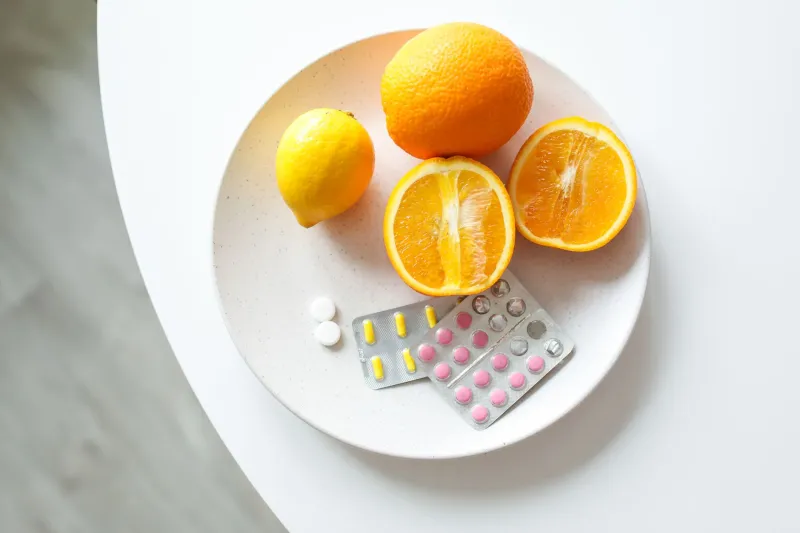
Grapefruit, along with Seville oranges and tangelos, contains compounds called furanocoumarins. These molecules irreversibly inhibit the CYP3A4 enzyme in the intestinal wall — the same enzyme responsible for metabolising dozens of common medications. When this enzyme is blocked, the body absorbs a far greater concentration of the drug than intended. For a patient taking atorvastatin or simvastatin for cholesterol management, this can translate into an elevated risk of muscle damage, a condition known as myopathy, and in severe cases, rhabdomyolysis.
What makes this interaction particularly deceptive is its durability. A single glass of grapefruit juice can suppress CYP3A4 activity for up to 72 hours. This means that a patient who drinks grapefruit juice on a Monday morning and takes their statin on Tuesday evening may still be experiencing the interaction — without any obvious connection between the two events.
For Canadians managing cardiovascular conditions, this is not a theoretical concern. Statins are among the most commonly prescribed medications in the country, and grapefruit is a routine part of many healthy diets. The solution is not necessarily to abandon grapefruit entirely, but to have an explicit conversation with a pharmacist about whether a patient's specific statin is affected — some, including pravastatin and rosuvastatin, are far less susceptible to this interaction than others.
Calcium, Dairy, and the Antibiotic Absorption Problem
A different mechanism underlies the well-established interaction between calcium-rich foods and certain classes of antibiotics. Tetracyclines and fluoroquinolones — the latter including commonly prescribed drugs such as ciprofloxacin — are particularly prone to a process called chelation, in which calcium ions in the gut bind to the drug molecule and form an insoluble compound. This compound cannot be absorbed through the intestinal wall, meaning a significant portion of the antibiotic dose is effectively lost before it ever reaches the bloodstream.
For Canadian patients treating bacterial infections, this reduction in bioavailability is not trivial. An antibiotic that fails to reach adequate serum concentrations may not eradicate the target pathogen, increasing both the risk of treatment failure and the broader public health concern of antimicrobial resistance.
Dairy products are the most common calcium source involved in this interaction, but calcium-fortified plant-based milks, antacids containing calcium carbonate, and calcium supplements can produce the same effect. Patients prescribed tetracyclines or fluoroquinolones are generally advised to take the medication at least two hours before or six hours after consuming calcium-rich foods or supplements — a timing discipline that requires awareness rather than dietary sacrifice.
Vitamin K, Warfarin, and the Leafy Green Dilemma
For Canadians on warfarin — an anticoagulant prescribed for atrial fibrillation, deep vein thrombosis, and mechanical heart valves — the relationship between diet and drug efficacy is particularly consequential. Warfarin works by inhibiting the production of vitamin K-dependent clotting factors. Foods high in vitamin K, such as kale, spinach, broccoli, and Brussels sprouts, can therefore counteract the drug's anticoagulant effect and increase the risk of clotting.
The critical nuance here is consistency rather than avoidance. Patients on warfarin do not need to eliminate vitamin K-rich vegetables from their diets — doing so would deprive them of significant nutritional benefits. What matters is maintaining a stable, predictable intake of these foods from week to week so that the prescriber can calibrate the warfarin dose accordingly. Sudden dietary changes — a week of green smoothies followed by a week of minimal vegetable consumption — create fluctuations in vitamin K intake that destabilise the drug's effect and require frequent dose adjustments.
This is a situation where dietary counselling and pharmaceutical monitoring work in tandem. Regular INR testing, combined with transparent communication between the patient and their pharmacist about dietary habits, is essential for safe warfarin management.
Tyramine, MAOIs, and a Dietary Interaction With Serious Consequences
Among the most clinically significant food-drug interactions is the one between monoamine oxidase inhibitors (MAOIs) — an older class of antidepressants still prescribed in cases of treatment-resistant depression — and foods rich in tyramine. Aged cheeses, cured meats, fermented products, and certain wines contain high concentrations of tyramine, an amino acid compound that is normally broken down by the enzyme monoamine oxidase in the gut.
MAOIs block this enzyme. When tyramine is not metabolised, it accumulates rapidly in the bloodstream and triggers a sudden, severe release of norepinephrine, which can cause a hypertensive crisis — a dangerous spike in blood pressure that may result in stroke or cardiac events. This interaction is not subtle, and for patients on MAOIs, adherence to a low-tyramine diet is a non-negotiable component of safe treatment.
How Canadian Pharmacists Incorporate Nutritional Screening Into Medication Reviews
Awareness of food-drug interactions is one of the areas where a thorough medication review — the kind conducted by pharmacists at reputable Canadian online pharmacy services — provides genuine clinical value. When a pharmacist reviews a patient's complete medication profile, they are trained to identify not only drug-drug interactions but also the dietary patterns that may be affecting treatment outcomes.
For patients managing multiple chronic conditions through long-term prescriptions, this review process can surface interactions that might otherwise go unnoticed for months. A patient who has been taking a fluoroquinolone antibiotic with their calcium supplement every morning, or who has been drinking grapefruit juice alongside their calcium channel blocker, may have been unknowingly compromising their treatment without any visible sign.
Online pharmacy platforms that offer integrated pharmacist consultations provide a structured opportunity to raise these questions. Patients are encouraged to share not just their medication list but also their supplement regimen and any dietary patterns that might be relevant — a conversation that can be as consequential as adjusting a dose or switching a formulation.
Practical Steps for Canadian Patients
The goal of understanding food-drug interactions is not to make eating an anxious exercise in avoidance. Most interactions are manageable with straightforward adjustments to timing, food choices, or supplement schedules. The first and most important step is simply to ask — specifically, to ask a pharmacist whether any of your current medications are known to interact with common foods or beverages.
When starting a new prescription, request written information about dietary considerations. Read the medication guide that accompanies your dispensed prescription. If you use a Canadian online pharmacy, take advantage of any pharmacist consultation service available to you and make a point of disclosing your full supplement and dietary context.
The relationship between what you eat and how your medications perform is a legitimate and well-researched dimension of pharmaceutical care. Treating it with the same seriousness as dosage timing or storage conditions is not excessive caution — it is simply good practice.