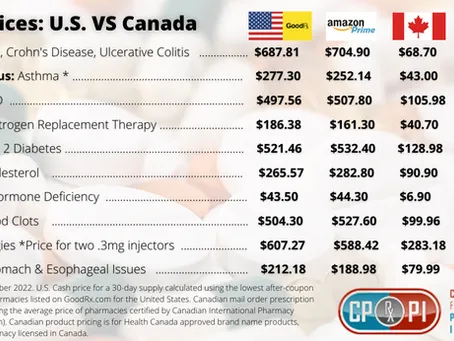
When Provincial Drug Plans Fall Short: How Canadian Online Pharmacies Fill the Coverage Gap
Photo: Canadian prescription medication coverage provincial healthcare pharmacy, via www.benecaid.com
Canada's public health care system is a source of national pride, yet a persistent misconception persists: that provincial drug coverage takes care of everything. For many Canadians, the reality arrives as an unwelcome surprise at the pharmacy counter — a medication prescribed by their physician simply is not covered under their provincial formulary, or it is covered only under restrictive conditions that do not apply to their situation. Understanding where these gaps exist, why they occur, and how licensed Canadian online pharmacies help bridge the divide is increasingly important for patients managing ongoing health conditions.
Understanding How Provincial Formularies Work
Each Canadian province and territory administers its own public drug benefit programme, and each maintains a formulary — an approved list of medications eligible for public reimbursement. These lists are developed through health technology assessments that weigh clinical evidence, cost-effectiveness, and budget impact. While the process is rigorous, it is also slow and constrained by fiscal considerations.
The result is a patchwork system in which coverage varies significantly depending on where you live. A medication readily available under Ontario's Drug Benefit programme may not appear on British Columbia's PharmaCare formulary, or may be listed in Alberta but only under special authorisation criteria. For patients with complex or rare conditions, navigating this landscape can be genuinely exhausting.
Where the Gaps Are Most Pronounced
Several categories of patients and conditions are disproportionately affected by formulary limitations.
Rare and Orphan Diseases Patients living with rare conditions often find that the specialised medications they require have not yet been assessed or approved for public reimbursement. The approval pipeline through the Canadian Drug Review — administered by the Canadian Drug and Health Technology Agency (CADTH) — can take months to years, leaving patients in a difficult waiting period.
Mental Health Medications While foundational psychiatric medications such as older antidepressants and antipsychotics are generally covered, newer formulations with improved tolerability profiles are frequently excluded from provincial plans or subject to prior authorisation requirements. For individuals whose condition has not responded to first-line options, accessing newer therapies can become a bureaucratic ordeal.
Chronic Pain and Inflammatory Conditions Biologic therapies used to treat conditions like rheumatoid arthritis, Crohn's disease, and psoriasis are among the most expensive medications on the market. Provincial plans often cover them, but with strict eligibility criteria — for instance, requiring documented failure of two or more conventional treatments before approval is granted. Patients who do not meet these criteria precisely may be denied coverage even when their physician considers the therapy medically necessary.
Working-Age Adults Without Employer Benefits Many provincial drug benefit programmes are designed primarily for seniors, social assistance recipients, and individuals with specific high-cost conditions. Canadians who are employed but do not have workplace benefits — a growing segment of the population amid the rise of contract and gig work — may fall entirely outside public coverage and face the full cost of their prescriptions out of pocket.
Real Scenarios Where Coverage Fails
Consider a 42-year-old woman in Nova Scotia recently diagnosed with a form of inflammatory bowel disease. Her gastroenterologist recommends a biologic agent as the most appropriate first-line therapy given her specific disease presentation. However, the provincial Pharmacare programme requires prior failure of conventional immunosuppressants before approving biologic coverage. She must either wait through a potentially ineffective treatment course or explore other options to access the medication promptly.
Or consider a self-employed contractor in Manitoba who earns too much to qualify for social assistance-based drug coverage but whose income does not support the cost of a brand-name medication for Type 2 diabetes — a condition that, left poorly managed, carries serious long-term consequences. Without employer group benefits, he is left to absorb the full retail cost.
These are not unusual situations. They reflect structural limitations that affect hundreds of thousands of Canadians each year.
How Licensed Canadian Online Pharmacies Provide an Alternative
Canadian online pharmacies regulated under provincial pharmacy legislation offer several meaningful advantages for patients navigating coverage gaps.
Access to Generic Alternatives at Reduced Cost Where a brand-name medication is excluded from a formulary, a therapeutically equivalent generic may be available at a fraction of the cost. Licensed online pharmacies in Canada are well-positioned to identify these alternatives in consultation with patients and their prescribers, helping to reduce out-of-pocket expenses without compromising treatment outcomes.
Transparent Pricing and Competitive Dispensing Fees Brick-and-mortar pharmacies in urban centres often carry higher overhead costs, which can translate into elevated dispensing fees. Canadian online pharmacy services — operating with different cost structures — frequently offer more competitive pricing, particularly for patients filling 90-day supplies of maintenance medications.
Pharmacist Oversight and Medication Review A common misconception is that online pharmacies operate without meaningful professional oversight. Reputable Canadian online pharmacy services employ licensed pharmacists who review every prescription, screen for drug interactions, and are available to answer patient questions. This level of care is consistent with the standards upheld by provincial pharmacy regulatory bodies.
Continuity of Supply for Cross-Provincial Situations For Canadians who move between provinces, work remotely, or spend extended periods away from home, maintaining a consistent medication supply can be logistically challenging. Online pharmacy services simplify this process, ensuring that coverage gaps caused by administrative transitions do not interrupt treatment.
What to Look for in a Reputable Service
Not all online pharmacy services are equal. Patients should verify that any online pharmacy they use is licensed by the relevant provincial pharmacy regulatory authority, requires a valid Canadian prescription, employs registered pharmacists, and provides a clear process for raising concerns or questions. The Canadian International Pharmacy Association (CIPA) provides a directory of verified members that can serve as a useful starting point.
A Practical Path Forward
Canada's provincial drug coverage system provides an essential safety net, but it was never designed to be comprehensive for every patient in every circumstance. For those who find themselves outside its boundaries — whether due to formulary restrictions, income thresholds, or the nature of their condition — licensed Canadian online pharmacies represent a legitimate, regulated, and often more affordable means of accessing the medications that support their health.
If you believe your current medication costs are higher than they need to be, or if a prescribed therapy falls outside your provincial plan's coverage, speaking with a pharmacist at a licensed online service is a sensible first step. Trusted Canadian medications, delivered with professional care, remain within reach.