Crossing Borders With Confidence: A Canadian Traveller's Guide to Transporting Prescription Medications Safely and Legally
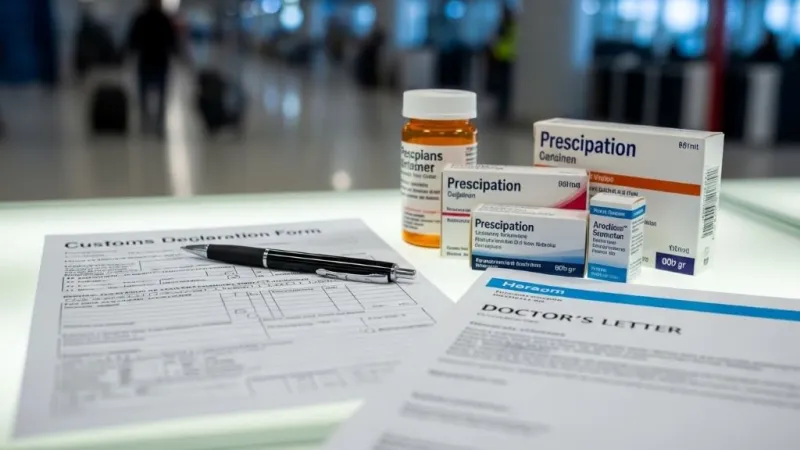
Photo: Canadian passport prescription medication travel documents airport customs, via looneynature.com
For millions of Canadians who rely on daily prescription medications, travel introduces a layer of complexity that goes well beyond booking flights and packing luggage. Whether you are heading south to Florida for the winter, embarking on a European river cruise, or making a quick business trip to New York, the question of how to legally and safely carry your medications across international borders is one that deserves serious attention long before your departure date.
At Canadian Pharmacy Online HQ, we work with patients across the country who routinely plan their medication needs around their travel schedules. The concerns we hear most often are remarkably consistent: Will customs officials confiscate my medication? Do I need a letter from my doctor? What happens if I lose my pills mid-trip? This guide addresses each of those questions directly and equips you with a practical framework for stress-free travel.
Understanding the Legal Framework: What Canadian Law Says
Health Canada governs the movement of controlled and non-controlled prescription medications across Canadian borders. When departing Canada, travellers are generally permitted to carry a personal supply of prescription medication—typically defined as a quantity sufficient for the duration of the trip, up to a 90-day supply in most cases. However, controlled substances (such as opioids, benzodiazepines, and certain stimulants used for ADHD management) are subject to stricter scrutiny under the Controlled Drugs and Substances Act.
For controlled substances, carrying an original prescription or a letter from your prescribing physician is not merely advisable—it is essential. Canadian Border Services Agency (CBSA) officers have the authority to question travellers about any medication that does not have clear documentation, and ambiguity can lead to delays or, in rare cases, confiscation.
For non-controlled medications such as antihypertensives, statins, thyroid hormones, or diabetes treatments, the regulatory requirements are less stringent but documentation remains strongly recommended.
Destination-Specific Considerations
Different countries maintain vastly different rules regarding medication importation, and what is perfectly legal in Canada may be prohibited or restricted elsewhere.
United States: The U.S. Food and Drug Administration (FDA) generally permits travellers to bring a personal supply of medications for their own use, provided the medication is declared and accompanied by documentation. Canadians crossing into the U.S. with medications that are not FDA-approved (including some compounded medications or newer generics) should verify admissibility in advance through the FDA's official guidance or by contacting the U.S. embassy.
European Union: EU member states have varying policies, but travellers carrying more than 30 days' worth of medication may be required to present a medical certificate issued by a licensed physician. Countries such as France, Germany, and the Netherlands each have their own customs thresholds. The European Commission provides a standardised medical certificate template that is recognised across member states.
Countries With Strict Narcotics Laws: Japan, the United Arab Emirates, Singapore, and several other destinations maintain extremely strict narcotics regulations. Medications that are entirely routine in Canada—including some antihistamines, codeine-containing products, and certain antidepressants—may be classified as controlled substances abroad. Travellers must research destination-specific rules well in advance and, in some cases, obtain advance import permits from the destination country's embassy.
Building Your Medication Travel Kit: A Practical Checklist
Preparation is the single most effective way to avoid complications. Before any international journey, work through the following checklist:
- Obtain original, labelled pharmacy bottles. Do not transfer medications into unlabelled containers or pill organisers for the duration of customs screening. Keep medications in their original dispensed packaging with the pharmacy label intact.
- Request a travel letter from your physician or pharmacist. This letter should include your full name, the medication name (both brand and generic), dosage, prescribing physician's contact information, and the medical condition being treated.
- Carry a copy of your prescription. A printed or digital copy of your most recent prescription provides an additional layer of documentation.
- Confirm your supply is adequate. Calculate the exact number of days you will be away and add a buffer of at least five to seven days to account for delays or unexpected extensions.
- Check destination-specific rules. Use the International Narcotics Control Board's (INCB) online resources or contact the destination country's embassy directly.
- Separate your medications in carry-on luggage. Never check critical medications in your hold luggage. Lost or delayed baggage is a genuine risk, and accessing replacement medications in a foreign country can be both difficult and expensive.
- Store medications appropriately. Temperature-sensitive medications (such as insulin or certain biologics) require insulated travel cases and, on longer flights, advance communication with airline staff regarding refrigeration options.
What To Do When You Run Out Abroad
Despite careful planning, situations arise. A trip extends unexpectedly, a bag is lost, or a prescription runs out sooner than anticipated. In these moments, having a relationship with a reliable Canadian online pharmacy becomes genuinely invaluable.
Canadian Pharmacy Online HQ maintains your complete prescription history and can coordinate with your healthcare provider to facilitate emergency refills or prescription transfers. While cross-border medication shipments are subject to regulatory constraints, our pharmacists can advise you on the fastest legal pathways to resupply—whether that means coordinating with a local pharmacy abroad, facilitating a prescription transfer, or guiding you toward appropriate local healthcare services.
Travellers within Canada who are visiting another province also benefit from pharmacist-to-pharmacist communication. Most Canadian provinces now participate in prescription transfer protocols that allow a local pharmacist to dispense an emergency supply based on communication with your home pharmacy.
Planning Ahead With Your Online Pharmacy
One of the most underutilised advantages of an online pharmacy service is the ability to coordinate your medication supply well in advance of travel. Rather than rushing to your neighbourhood pharmacy the day before departure, patients who use Canadian Pharmacy Online HQ can:
- Request travel supplies with sufficient lead time to avoid gaps
- Receive medications delivered directly to their home before departure
- Access their full medication history and documentation in digital format
- Consult with a licensed pharmacist about destination-specific storage and regulatory requirements
Proactive planning transforms what can be an anxious experience into a straightforward administrative task. Our pharmacists are available to answer country-specific questions and help you assemble the documentation package most likely to facilitate smooth customs clearance.
A Note on Travel Insurance and Medication Coverage
Many Canadians do not realise that travel insurance policies vary significantly in how they handle medication-related emergencies. Some plans cover the cost of replacing lost medications abroad; others do not. Before departing, review your travel insurance policy specifically for medication replacement coverage and emergency prescription services. If your current plan is silent on this issue, consider upgrading or supplementing your coverage.
Final Thoughts
Travelling with prescription medications does not need to be a source of anxiety. With the right documentation, a thoughtfully assembled travel kit, and a proactive relationship with your pharmacy, you can move across borders with full confidence that your health needs are protected. Canadian Pharmacy Online HQ is committed to supporting your health not just at home, but wherever your travels take you. Reach out to our pharmacist team before your next trip—we are here to help you prepare.